

One of the most common UFO objections is that with billions of cameraphones produced over the past decades, why aren’t there better photos? Though military imagery is often not released at full resolution, as it would reveal capabilities, civilian data would have no such restrictions.
To test whether you could actually use cameraphones to capture airborne objects, I used my iPhone 15 to photograph conventional aircraft whenever they appeared. (I didn’t just go to the airport, as planes that frequent, low, and close wouldn’t be representative of mysterious flying objects.)
I learned a few things:
It’s hard to remember to take a photograph immediately. There’s usually only 5-10 seconds to get a good shot of a nearby aircraft, and in that time you have to spot it, remember you’re supposed to take photos, physically take out your phone, open the camera app, get the object in frame and focused, and take the picture. The first time I tried, the helicopter I’d spotted had flown out of sight before I was ready. Afterward, I programmed my phone’s external button to be a camera shortcut so I’d be ready next time.
Apparent velocity means that close objects move through your field of view faster than distant ones. This means taking a photo in time is harder the nearer the object is. It’s an inherent tradeoff: the closer and therefore clearer the photograph, the less chance you have to capture it.
Cameraphones are designed to take photographs of nearby objects, i.e. people a short distance away. Some of the higher-end models have zoom lenses, but this is a recent development. Without a zoom lens or viewfinder, even close-seeming planes were usually too small to be made out on the phone screen in the heat of the moment. I learned I had to point as best I could and hope it turned out.
I photographed about a dozen planes, and here’s the best shot I managed. Despite how it looks, the plane1 was flying low and nearby; it was loud enough to compete with the conversation I was having. I captured it on a clear, bright day, with both the 3x optical zoom lens and the no-zoom lens, on my iPhone camera:
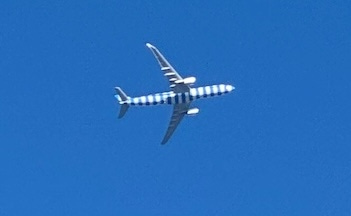
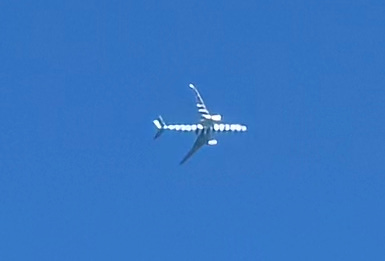
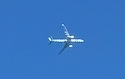
The last photo is an illustration of what it might have looked like if captured with a 12 megapixel (MP) camera. The chart below shows that phone cameras with 13MP or less were the majority until 2022, so that somewhat blurry photo is more representative of typical photo quality over the last decade of smartphone cameras.

Here’s a photo of a plane farther away; only barely audible, but still clearly visible:
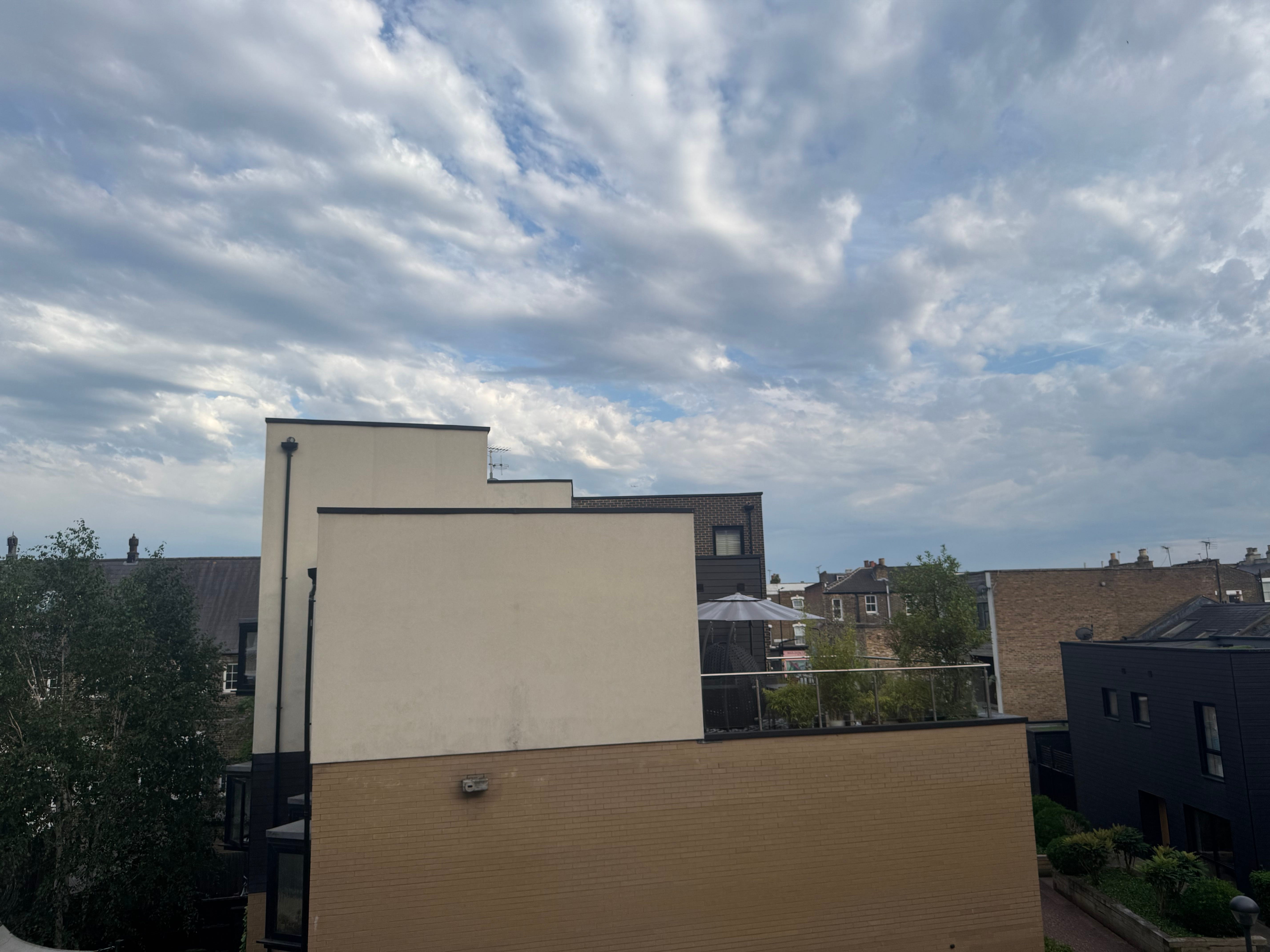
Can’t see it? Neither could I, which is why I had to point and hope for the best. Here’s it blown up:
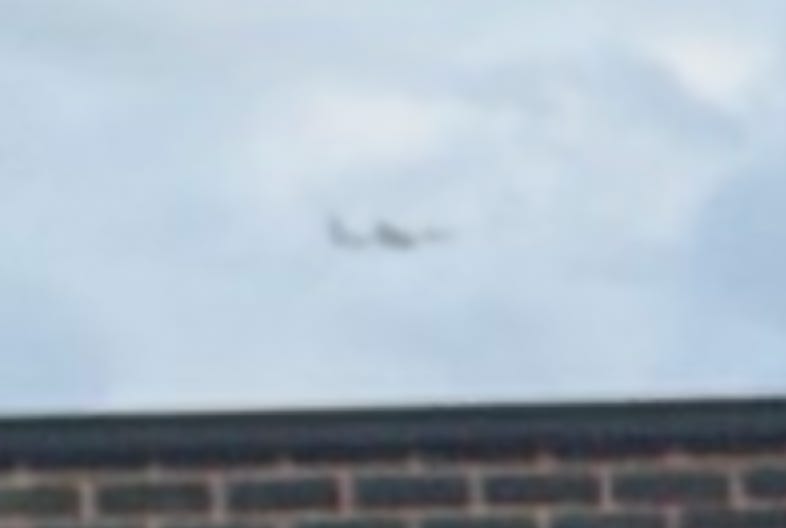
Quite the blur. Even a top-of-the-line cameraphone shot of a visible airliner is faint and blurry. If aircraft, which are relatively big, slow, noisy, and predictable, are tough to photograph with a phone, then UFOs would be even tougher. We shouldn’t expect a vast number of good UFO pictures.
That said, we should still get lucky occasionally and capture a photo of a UFO when it’s close and slow.
And we have some! For example, this photo of the runway at Manchester Airport was taken by a commercial pilot from his cockpit2:
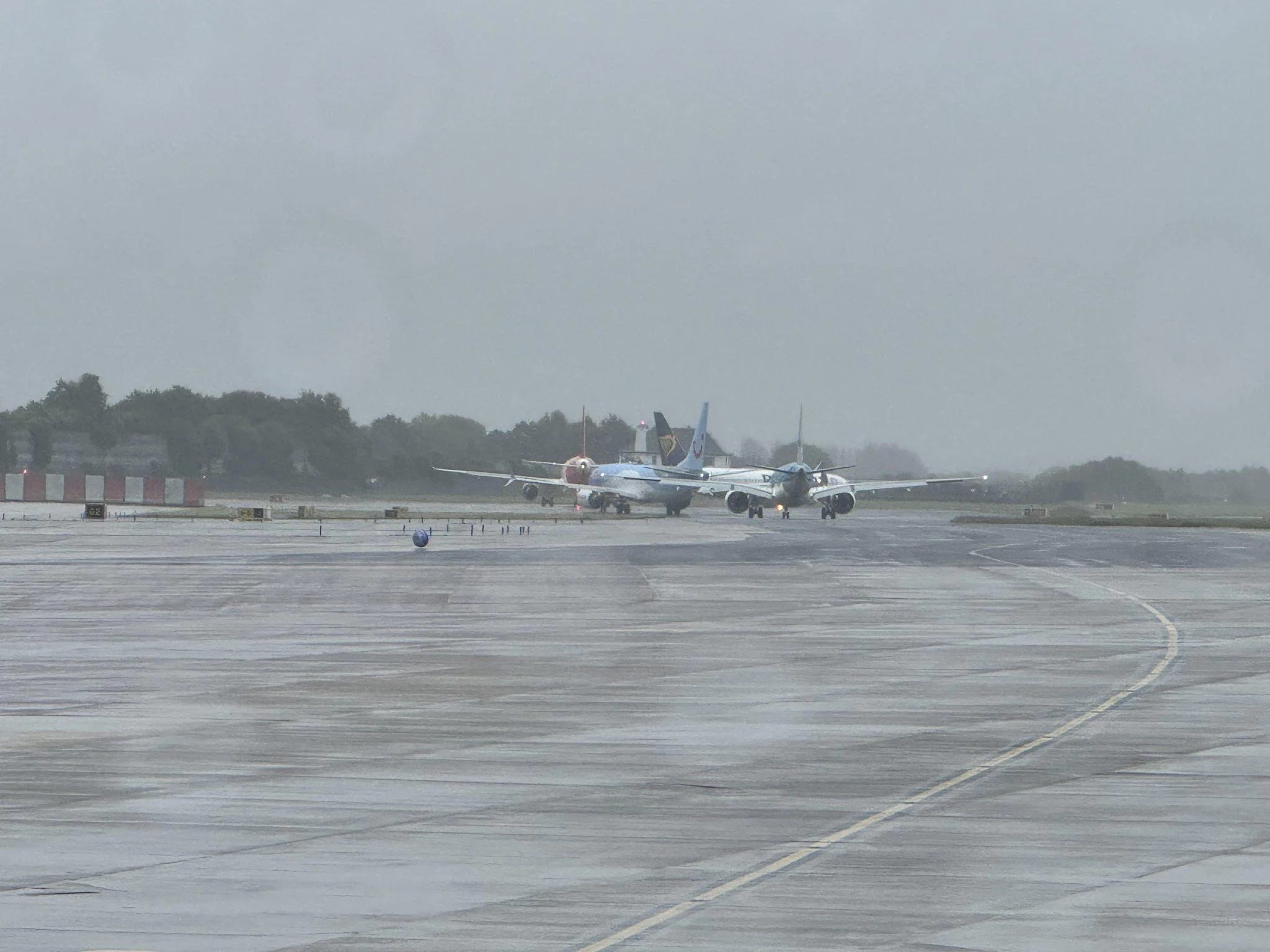
The UFO is no more out of focus than the actual airplanes in the background. There is also an accompanying video of the UFO high up above the runway. You can call it fake3 or a case of mistaken identity4, but you can’t say it’s especially blurry.
If you wonder why there aren’t more UFO photos, try photographing passing airplanes with your smartphone. The difficulty quickly becomes obvious.
The original Twitter account that released the photos, “@captainbiggalow”, was deleted shortly after posting, though there are mirrors. Another interesting smartphone capture is this video.
This analysis showed no evidence of photo manipulation.