

As part of a little project, other blogging friends have also made related posts on mimetic ideas.
“Maybe we should spin it,” I suggested to my friend Adam as we sat side by side at a 2023 nuclear fusion conference.
We’d been pitching attendees our Metal Foil Pump, which was meant to pump hydrogen around a fusion reactor. The first question I’d always get was, “can it separate the tritium?” which is the incredibly scarce fuel needed for a fusion reaction.
I’d say no, it couldn’t, and I'd watch their disappointment grow and their interest fade. After the third time, I started thinking about how we might separate the valuable tritium from the rest of the hydrogen.
Tritium is like regular hydrogen, except that it has two neutrons, so it’s heavier than the other isotopes. The usual way of separating things by mass is by spinning them in a centrifuge, so that the heaviest components end up on the outside, and the lighter ones on the inside.
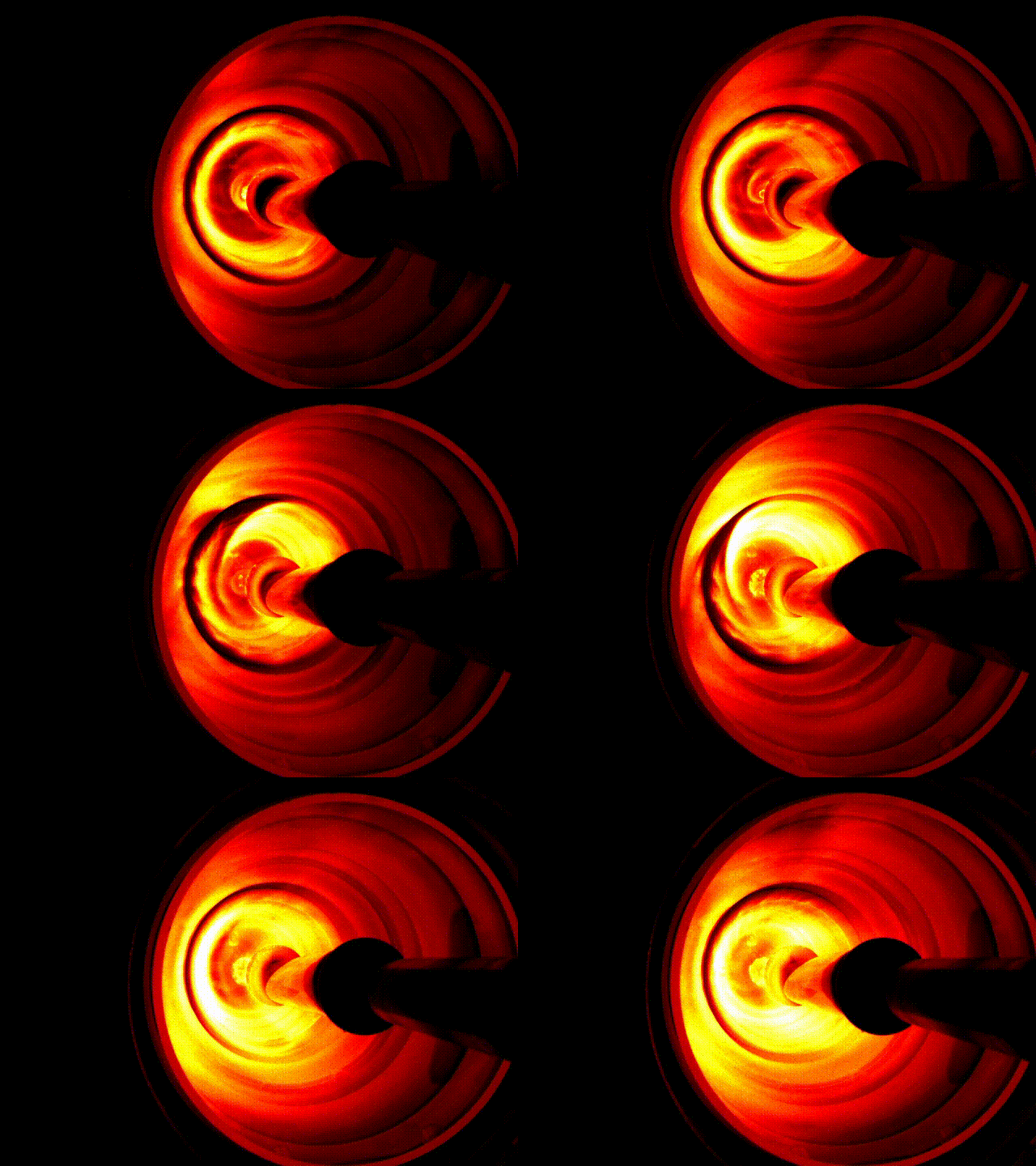
When I mentioned this to Adam, it got him thinking. Our current system consisted of plasma in a chamber that could, in principle, be spun. Alternatively, he realized, the plasma itself could be rotated with electric and magnetic fields. This meant no moving parts, and as we later discovered, velocities of tens of kilometers per second.
This wasn’t the invention of the plasma centrifuge, though; it was simply a rediscovery, after it had first been developed in Russia 40 years earlier.1 It seemed to have disappeared after the fall of the Soviet Union, though, so we picked up where they left off. Three years after that conversation, a working device was breaking records at Adam’s San Francisco lab.
This was the beginning of my realization that the best ideas are just lying around.
The Bottleneck is Execution, not Ideation
This has become a cliché, but usually in the context of worrying about people “stealing your ideas.”
Don’t worry about people stealing your ideas. If your ideas are any good, you’ll have to ram them down people’s throats. — Howard Aiken
Coming up with ideas is easy, compared to testing ideas. Most ideas never get tested, even though that’s the only way to find out whether they were any good. There’s such a mismatch between the supply of ideas and the testing of them, that really most ideas have been proposed at some point; it's just that we’ve never done the work to separate the wheat from the chaff.
We Overrate Our Own Ideas, and Underrate Others’
It’s possible that your idea is actually brand new, especially if it’s in a new field. However, it will probably at least resemble some earlier idea, like how Google’s backlink algorithm resembled (and was inspired by) citation counts for academic papers.
If coming up with ideas is easy, and you’ve come up with something no one has ever proposed, that’s probably because it’s especially dumb rather than especially creative.
And we’re precious about our own stuff. The IKEA effect is the phenomenon that people place disproportionately high value on things they’ve made. We’ll pay much more for furniture we’ve assembled ourselves compared to an identical one assembled by somebody else.
Meanwhile, taking an existing idea feels like “stealing” (it’s not, unless there is actual IP), and it can be tempting to call it sour grapes because it’s no longer available to be first proposed.
Both are wrong, and your bad ideas can lead you off a cliff while ignoring good ideas all around you.
(A tip for taking ideas in a dignified way: Find the earliest plausible instance of the idea in any form. Once an idea is seen as at least a few decades old, taking it feels more like “rediscovery” or “passing the torch,” not stealing.)
It’s Passed the Meme Test
Your original idea, that no one else is using, is so bad that not only has no one else proposed it, but also no one else has even bothered to steal it. It hasn’t even convinced one person.
But an idea that you take necessarily has, because it’s convinced you. It’s passed the “meme” (i.e., virality) test at least once, while your own idea hasn’t.2
Every time I’ve built an original idea, the process felt like pushing a boulder uphill. There was progress, but it required constant pressure. I assumed that’s just how it was, and I needed to embrace the grind.
But once I started “stealing” ideas, it felt like pushing a boulder downhill; they seemed to roll on their own, and my pushes just made them go even faster.
This is so common that “there’s nothing new under the sun, just stuff invented in Russia 40 years ago” is an aphorism in fusion energy, and probably in other fields as well.
Of course, this could lead to you being infected by others’ spreadable, merely good-sounding ideas, but your ideas might just be good-sounding and not even spreadable.
I can't wait for 2066, just to find out what they are doing now...
This is awesome
If only we had a mechanism to see which ideas could crowdfund the most support…