

Kelly Johnson is arguably the most credible UFO witness of all time.
He led Skunk Works, Lockheed Martin's legendary advanced development program that created the U-2 and SR-71. It would be fair to call him the most decorated aerospace engineer of the modern era. He was not only qualified to distinguish aircraft from other phenomena, but he would also have recognized secret advanced projects because he led the programs that built them.
Last week, it was declassified that in 1953, he saw a UFO from his California ranch, at the same time that a separate aircrew saw something similar.
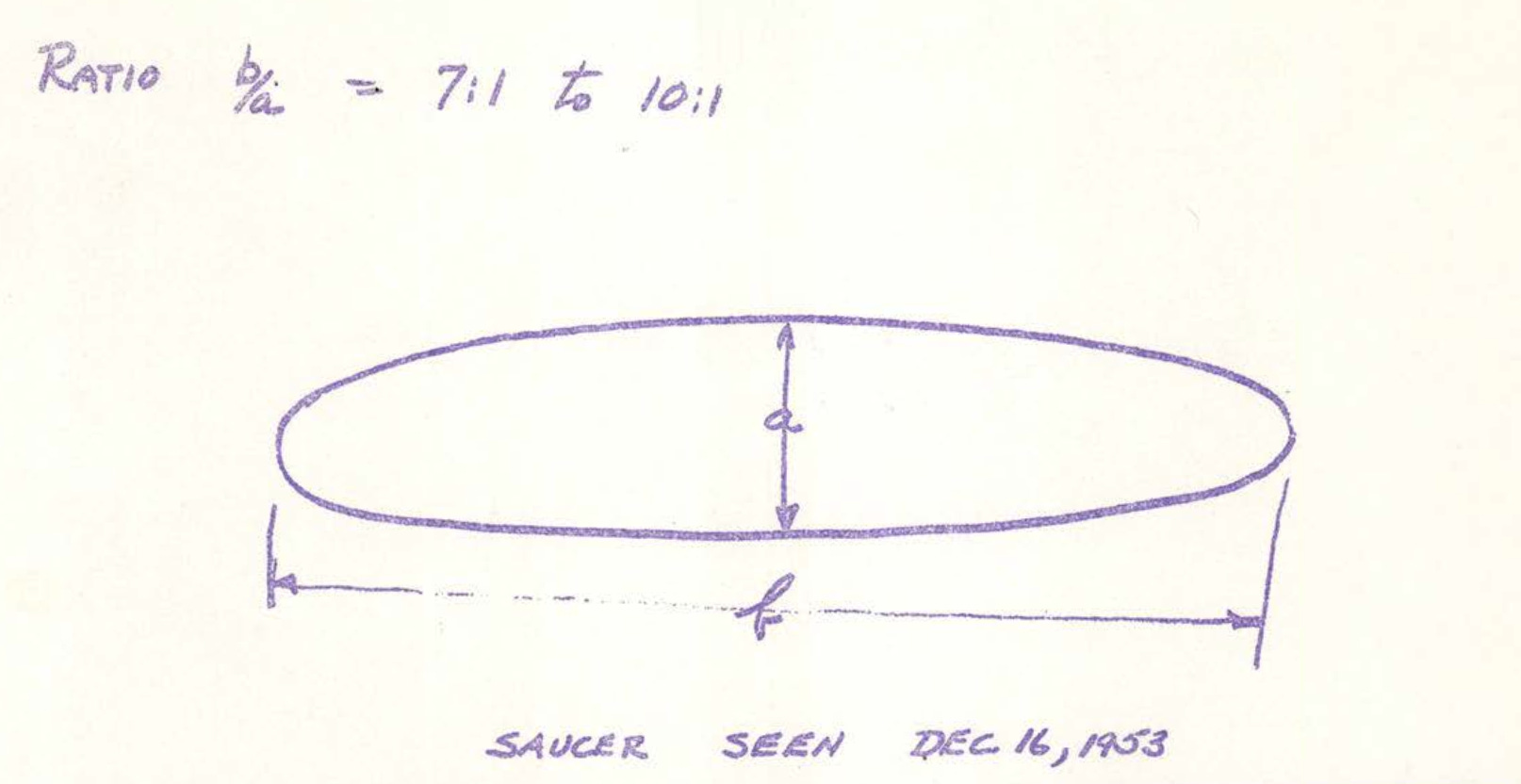
However, despite being the head of engineering at Lockheed Martin, as described in the report’s cover letter, he didn’t want to report his sighting because of the stigma:
Mr. Johnson was most reluctant to write the report in the first place and then refused to forward it to you because of his belief that those who profess to have seen flying saucers are not usually considered to be logical and practical hard-headed engineers.
Then, as now, there was a stigma around UFOs, particularly for the “logical and practical” scientific types.
From Nuclear Engineer to UFO Hunter
Before I started building small radars to look for UFOs, I worked in nuclear fusion, and before that I worked in manufacturing engineering.
When I first moved into fusion energy, the status difference in the field was immediately noticeable. It’s not to say that manufacturing was unimpressive, but it never elicited any oohs or ahs the way nuclear fusion did. People would assume I was a genius, that I had a PhD in physics (I still get emails addressing me as Dr.), or that my work would be inscrutable to their lowly minds. I realize people were often just being polite or playing along, but no one ever went through this song-and-dance when I was making car parts.1
Sometimes this might be tongue-in-cheek, and one group of friends began referring to me as a “fusion bro”. Still, it was a job that seemed to demand commentary.
It was a few years of this before I started my UFO radar project, so I had a good baseline from which to compare the differing reactions. UFOs are clearly low-status, lower than manufacturing engineering, and much lower than nuclear fusion. It would be easy to focus on the negatives, like the ensuing difficulties with getting funding and hiring, or getting people to take you seriously.
However, I clearly think the pros outweigh the cons, so I’ll list the perks I have found. I don’t expect this to convince anyone to work on UFOs, but perhaps it will encourage you to pick some underrated topic of your own.
1. People will show you their true colors
Nothing gives permission to drop pretenses like someone low-status. For example, in San Francisco, when a homeless guy tries to talk to you, it’s considered a normal and acceptable reaction to just completely blank them. That is to say, act as if they don’t exist, and didn’t say anything.
I don’t blame anyone in SF for doing this; rather, I just want to illustrate that you’re socially allowed to act in ways that wouldn't be considered acceptable in other contexts.
Someone openly working on UFOs is similarly a social permission slip to disregard certain niceties. Most people do not do this (as I will elaborate later), but maybe about 5-10% do turn weirdly hostile.
I’m not describing acting smug, superior, or self-righteous; people do that all the time over trivial differences of opinion, and I’m sure I’m sometimes guilty of this too. I mean actual offense, rudeness, and aggressive counter-argumentation- more the type of reaction you’d expect for an actual heresy, like “slavery was actually good” or something.
UFOs, however, aren’t a heresy, though. Nearly half of Americans believe that aliens have visited Earth at some point. And while many people find the idea dumb, few find it morally objectionable rather than misguided.
It seems that the most negative reactions are then status-driven rather than norm-enforcing. This also tracks with the fact that negative reactions are pretty rare; if I were really saying the unthinkable, I’d expect more frequent pushback.
The upshot is that the reaction to this is a pretty good barometer of how consensus-minded and status-minded a person is.
2. People open up to you
While some fraction is hostile, another fraction is thrilled to finally be able to talk about aliens.
Many people I meet have had a childhood fascination with extraterrestrials, but had to “grow up” and get a real job. Maybe they were lucky and still got to do something interesting, but nothing really stacks up to alien-hunting for these folks.
They’re often excited on my behalf, just happy to know someone out there is pursuing this wacky dream. They want to hear all the latest developments, and there’s almost a sense of nostalgia and catharsis in having the chance to talk about something that was meaningful to them.
Beyond just giving people permission to talk about the subject, I’ve found it also lets them open up about their personal experience. Like Kelly Johnson, most people are reluctant to talk about their own UFO sightings, but once I’m open about my work, very sober people will end up telling me mind-blowing stories.
After a couple of years of this, I’ve estimated that about 10-20 percent of people have seen a UFO in a way that can’t be easily explained as a prosaic phenomenon. Earlier this year, I was surprised to find that my estimate was validated by a recent Gallup poll in which 17% of Americans reported having seen a UFO.
…continued in part 2:
-Respect for the hustle
-You can be surprisingly convincing
-It’s an uncrowded field
Though if I mentioned that I once lived in a Chinese factory making parts, people would take note. If you are salt-of-the-earth enough, it loops around and gets impressive again.