

An objection to UFOs that I sometimes hear, though never from anyone who’s worked around sensitive work, is that the government just can’t keep secrets.
I understand this; it seems like the government is so huge and frequently incompetent that doing an adult thing, like keeping secrets indefinitely, just seems impossible. Surely some idiot will drunkenly spill the beans eventually.1
But security is better than it might seem because of the toupe fallacy: only poorly concealed secrets ever get noticed, so it appears that secrets are generally not well kept. However, when happenstance reveals programs that otherwise haven’t leaked, we get a glimpse of just how much is kept secret and how they manage it.
1. Incentives - The Snowden Files
In 2013, Edward Snowden flew to Hong Kong and released classified documents to journalists on the NSA’s global wiretapping program. From there, he flew to Moscow, lived in the Airport for a month, and was finally granted asylum in Russia. His now-wife relocated to be with him, and they’ve stayed ever since.
You’re probably familiar with Snowden’s story as the biggest whistleblower disclosure in American history. You might even think that this proves that the government can’t keep secrets.
What it more clearly demonstrates, though, is the enormous consequences of leaking classified information, and why it never came out earlier. Snowden had to permanently leave his home to live in a comparatively poor authoritarian country. He’s still there now, and if the political situation ever changes, he could well become a bargaining chip.
The US government has continued to pursue him, despite some of the programs being ruled illegal in United States v. Moalin, which shows the enormous costs the government is willing to inflict on even righteous whistleblowers.
Everyone who works around sensitive programs knows this, has been briefed extensively on it, and really tries not to do anything that even has a whiff of leaking, for fear of their lives being ruined.
2. Compartmentalization - Stealth Helicopters
In May of 2011, Sohaib Athar live-tweeted the raid that killed Osama Bin Laden:
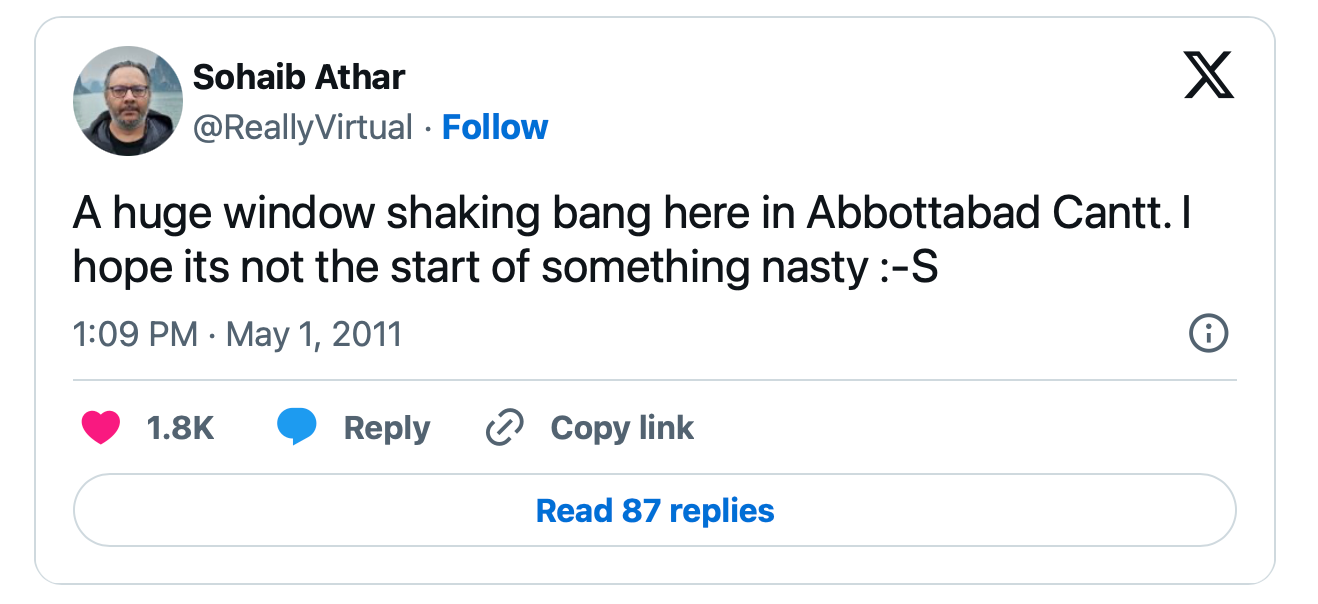
He was not only announcing what turned out to be the location of Bin Laden, but also the existence of stealth helicopters:
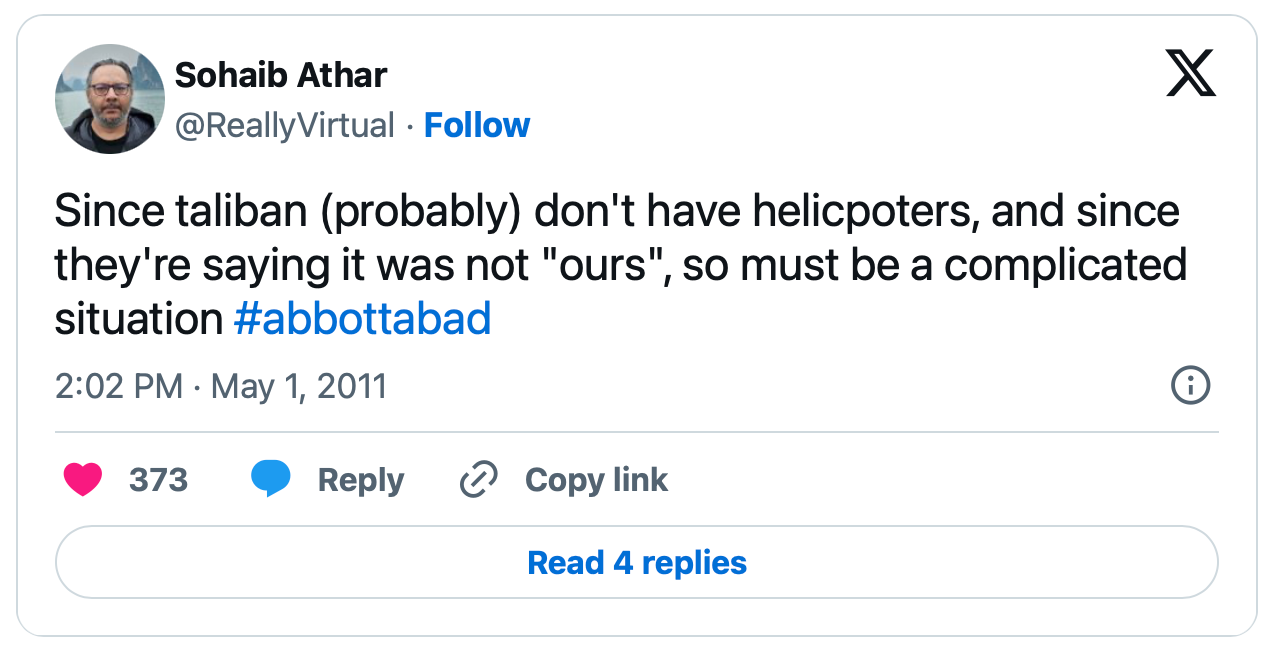
Before one accidentally crashed in the raid, the existence of operational stealth helicopters was not publicly known, even to elected representatives, aside from a select few specifically cleared.
Depending on how you count, there could have been hundreds of thousands of people in on the secret before the crash, because that’s how many people are in a stealth helicopter’s supply chain.2
The way it never gets out, though, is through compartmentalization, meaning dividing the information and spreading it widely. Each entity works on a tiny portion of the whole, so it can’t identify the bigger picture. If all you can see is a fastener, coating, or shroud, you may not even be able to figure out what sort of machine it’s for.
3. Disinformation - Havana Syndrome
See my Havana Syndrome post for more on this.
Denying and obfuscating allows secrets to be kept, even when there’s evidence out in the open. This is the case with Havana Syndrome, a debilitating medical condition suffered by American diplomats (read: intelligence agents) stationed in Cuba.
It was denied for years as psychosomatic and phisologically implausible, until earlier this year, Trump blabbed to reporters that the US used directed-energy weapons to induce similar symptoms in Venezuelan soldiers.
You don’t necessarily need to keep things secret if you can keep them unbelievable.
When Secrecy Works Too Well - FOGBANK
FOGBANK is a highly classified material that is suspected to be an aerogel booster in the fission-fusion process of a thermonuclear warhead.


But if it’s so secret, why does it have a Wikipedia page? Well, the problem is that it was kept too secret.
It was first produced in the 70s and 80s, alongside the production of the warheads it would go into. Then, in the 90s, when the warheads were ready for refurbishment to extend their service life, it was realized that suitable FOGBANK material was unavailable. Not only that, but the secret of even how to make it was completely lost, with records destroyed, and personnel elsewhere, retired, or dead.
This led to severe delays and cost overruns, as the material had to be painstakingly reverse-engineered from whatever they had, and it all came out in a Government Accountability Office report.
Sometimes the government keeps a secret so well that even they can’t find it.
I’ve previously worked in aerospace manufacturing; it’s not impossible that I was in the stealth helicopter supply chain and didn’t know it.