

The Dark Forest Hypothesis is a solution to the Fermi paradox, which asks why we don’t see extraterrestrial life despite a huge universe estimated to contain 10²³ planets.
The idea is that the universe is like a “dark forest” where one must hide and stay silent, or risk being eaten by a more powerful creature. If ever detected, it means near-certain death because others will locate and destroy you preemptively, out of fear that if found, you would do the same to them.
This thus proposes that there are many extraterrestrial civilizations, but they all choose to keep quiet, and the ones that didn’t are no longer around to hear from. The concept has been popularized by the excellent sci-fi novel The Three-Body Problem, and it plays a prominent role in the plot.
However, though working as a narrative device, in real life, Dark Forests are surprisingly hard to find. For example, listen to this short clip from the Amazon:
What you’ll immediately notice is that the jungle is not always silent, as anyone who’s spent time in dense woodland can attest. So it seems even dark forests aren’t really “dark forests.”
That said, perhaps “dark forest” is just a convenient ecological metaphor. Once the entities are civilizations, rather than organisms, does the dynamic emerge?
But Why Namibia?
If you think that Dark Forest is the stable equilibrium that civilizations reach in response to each other, you’ll have to answer the question: Why does Namibia still exist?
The theory claims that rational actors will destroy any new civilization they find before it can become a threat. But if this is true, shouldn’t NATO have annihilated Namibia (or any other small nation) by now?
There are two reasons why NATO doesn’t go on a rampage, and here, both apply:
There are values and norms against arbitrarily destroying other countries.
Namibia is not, even to the tiniest degree, considered a threat.
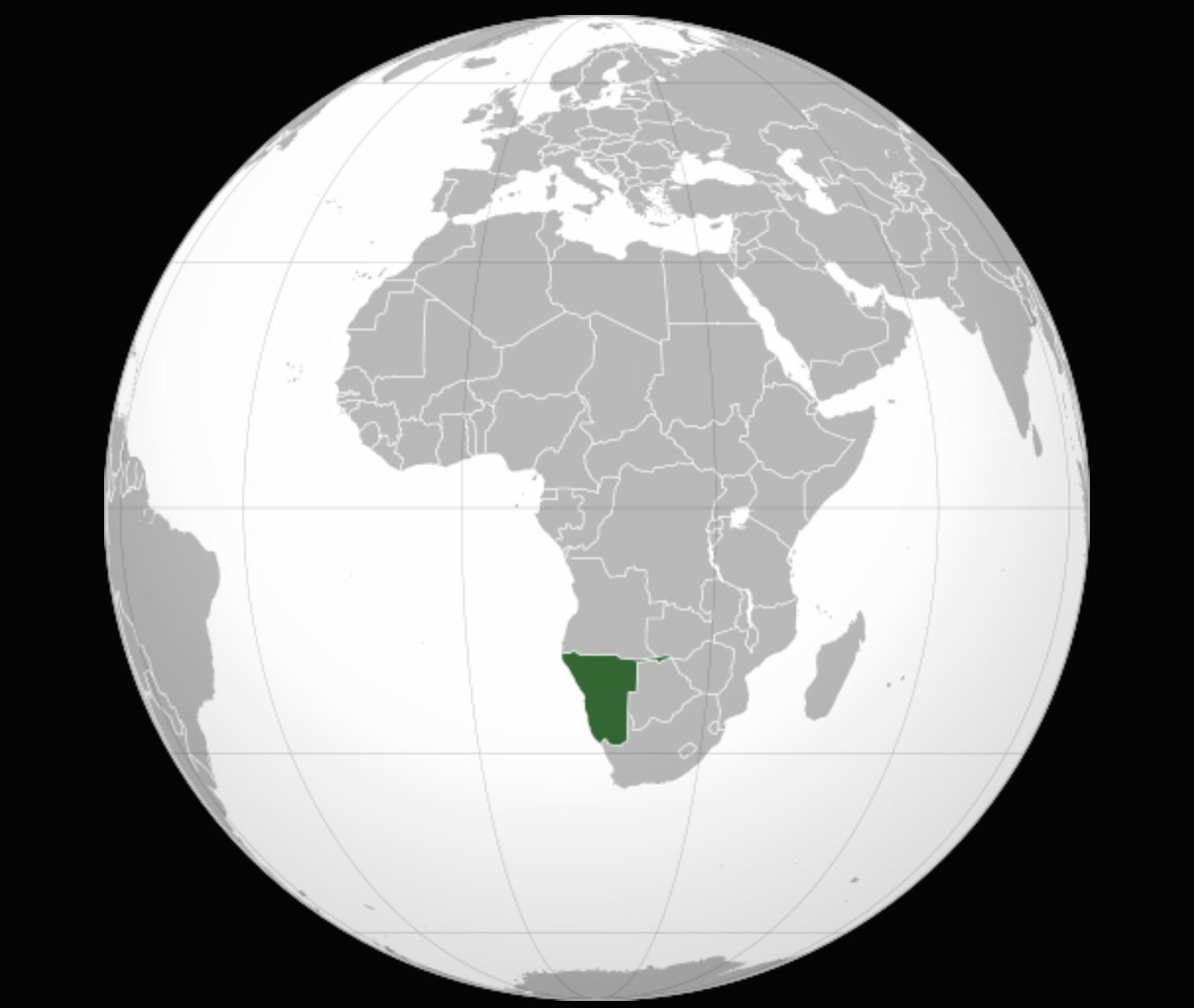
NATO doesn’t consider Namibia even remotely a threat. Yet, Namibia is technologically closer to NATO than any interstellar civilization would be to NATO.
Unless you think NATO is secretly harboring a desire to end Namibia, and is only held in check by modern values, this is evidence that a civilization considers preemptive annihilation only for near-peers.
So, when this has been the case, how has it played out?
Near-Peers
There have been many near-peer rivalries among human societies, but most of them have occurred before preemptive total annihilation was straightforward. You do have examples such as the Mongols massacring whole societies, but that was part of conquest, and if the victims had surrendered, they would have been spared.
The closest example is during the short post-war period, 1945-1949, when the US had atomic weapons, but its new rival, the USSR, did not.
During this period, there were serious discussions of preemptive war with the Soviets before they could develop their own nuclear arsenal, and a group of top Air Force generals tried pushing this viewpoint onto civilian leadership.
However, even then, when an adversary with doomsday capability was about to emerge, this never gained traction among US leaders, and they didn’t even think an intentional war was likely.
The Best Example is Submarines
Submarine warfare is probably the closest example of a real-life Dark Forest dynamic, and militaries do go to great lengths to silence their vessels as much as physically possible.
First-mover advantage is enormous with torpedoes, and a direct hit is nearly certain to be fatal. A military vessel in wartime can assume it will be fired upon if detected, so it must remain undetected or destroy any adversary it finds immediately.
But to bring this back to extraterrestrial civilizations, we have to ask if our relationship to them would be more like 1) two submarines at war, or 2) late 40’s US and USSR, or 3) NATO and Namibia today.
Humbly, I’ll suggest that it probably isn’t even like NATO and Namibia, it’s more like homo sapiens and termites. Which means we’re considered no threat, and are safe as long as we don’t mess up the floorboards.
A key component of the theory in the book is the potentially rapid speed of tech advance. The US is confident Namibia cannot develop more advanced tech in a few years. The Trisolarans could not be.
Others have pointed out the difference in spacetime proximity as a reason why the NATO:Namibia analogy doesn't quite hold to the dark forest analogy in the book, but from what I remember of the story, the other reason the Trisolarans were interested in Earth was its stability/resource abundance. One could imagine in the Dune universe a situation where the Fremen might prefer not to announce their presence to their spacefaring neighbours so that they could keep the spice to themselves. Similarly, it goes without saying that there are many examples in human history of more advanced civilizations attacking and destroying weaker ones purely to have access to their resources. In fact, now Namibia has freshly found oil, I would expect other countries to suddenly be a lot more interested in it!